
Editorial Picks
5 24-Hour Facilities to Know at Incheon Airport
An editor's curated pick — five round-the-clock facilities that hold up to magazine scrutiny, not an exhaustive directory of every counter in the building.
There is a particular thrill in arriving at Incheon Airport on the 02:47 inbound from Doha or the 03:15 inbound from San Francisco — and a similarly particular thrill in standing at the T1 departures hall at 04:00 with a five-thirty boarding call and the rest of Seoul still asleep — because the building has, against the odds and against the general operational gravity of international airport real estate, calibrated itself into a 24-hour operational rhythm that very few other airports in the world have honestly achieved. JFK does not run on this rhythm. Newark does not run on this rhythm. Heathrow Terminal 5 famously does not run on this rhythm and politely asks redeye-arrival passengers to wait until 05:00 for most facilities to open. Most of the airports I have written about from the Manhattan magazine desk where I file copy operate on a thin-gruel overnight register where the food counters are closed, the lounges are dark, the information desks are unstaffed, and the unfortunate traveler arriving at 03:00 from a long-haul inbound is essentially shuttled into a holding pattern until morning. ICN is the exception — partly because the airport's master operational plan assumes a meaningful overnight transit volume rather than treating overnight arrivals as the unfortunate exception, partly because the Korean retail-and-service standards baked into the airport leases are calibrated against domestic-Seoul 24-hour convenience expectations rather than international-airport overnight-restraint norms, and partly because the airport's geographic position between Asian and trans-Pacific routings genuinely concentrates redeye traffic in a way that justifies the round-the-clock operational investment. What follows is five facilities — five, deliberately, because five is the number that survives editorial scrutiny rather than the number that fills a list. There are, by my unofficial count from cumulative overnight transits, somewhere upward of fifteen genuinely 24-hour operational facilities scattered across T1 and T2. Most of them are perfectly fine. These five are the ones I would tell a friend about, the ones I have personally relied on across overnight layovers ranging from a Tribeca-to-Manila routing with a 23:45 inbound to a JFK-to-Tokyo redirect with a 04:30 onward departure, the ones that hold up the way a Manhattan all-night diner holds up across repeat 02:00 visits. This is the curated pick, not the exhaustive count — and the curation itself is the editorial argument. The 24-hour airport facility category is the one where the operational gap between excellent execution and mediocre execution is most visible, because the redeye-arrival traveler is in a state of compromised judgment and elevated need, and a facility that delivers honestly at 03:30 is doing magazine-grade work. These five deliver.

Featured A — Spa at Home (T1 B1 Concourse, 24 hours)
Spa at Home — the renamed-in-2026 iteration of what was, for the better part of a decade, the airport facility known to most international travelers under its previous branding — is the 24-hour Korean jjimjilbang and capsule-sleep facility tucked into the B1 concourse of T1, and it is, by any honest accounting, the single most operationally significant 24-hour facility inside the airport building itself. The jjimjilbang format is the Korean public-bath-and-rest-space tradition where you change into facility-provided uniform-shorts-and-t-shirt sets, move between hot-and-cold bathing pools and dry sauna rooms, and rest in communal sleep areas calibrated for the kind of multi-hour decompression that the overnight transit traveler genuinely needs. The Incheon T1 outlet operates on the same operational logic — entry pricing runs roughly KRW 12,000 to KRW 30,000 depending on time-of-day and facility-access tier, with capsule-sleep-room upgrades available for roughly KRW 50,000 if you want the genuinely-private sleep window rather than the communal-rest configuration. The framing point worth making is that Spa at Home is not a Western-style airport hotel and should not be evaluated as one — it is the airport-side iteration of a Korean cultural-facility category that has no direct Western equivalent, calibrated to traveler-decompression rather than business-hotel-amenity expectations. The communal-rest areas are mat-and-cushion configured rather than bed-and-pillow configured, the bathing pools are public-rather-than-private (separated by gender, as is the jjimjilbang standard), and the social atmosphere is genuinely more relaxed than what a Western traveler accustomed to a Marriott airport hotel might initially expect. For the redeye-arrival traveler who has just cleared immigration at 02:47 and faces a five-hour wait before the onward Seoul-bound train begins running, Spa at Home is the answer. For the magazine reader who has not previously experienced the jjimjilbang format and is unsure whether the cultural-format gap will translate, my Tribeca-editorial-desk advice is to commit to the experience rather than half-attempt it — the format works when approached as the cultural category it is, and the operational value for the overnight transit traveler is, frankly, transformative. The shower facilities alone are worth the entry pricing. The hot-pool soak after a thirteen-hour flight is, frankly, the operational argument. The dry-sauna sequence, if you have the time, is the secondary argument. The capsule-sleep upgrade is the answer for the traveler who has somewhere between four and eight hours to spend and wants the genuinely-rested onward departure rather than the merely-decompressed onward departure. The official airport directory at airport.kr lists current pricing and the operational hours (which, importantly, are genuinely 24 hours — verified across multiple overnight transits and cross-checked against traveler reports), and the multilingual signage in English, Korean, Japanese, and Chinese handles the language friction that the first-time-jjimjilbang traveler might otherwise stumble against. The locker system is straightforward, the facility-provided uniforms are clean and laundered, and the staff at the entry counter handle the inevitable confused first-time-international-traveler questions with the practiced patience that the airport-side outlet has developed across years of repeat redeye-arrival traffic. There is a particular thrill in walking out of Spa at Home at 06:30 after a four-hour jjimjilbang sequence — shower, soak, sauna, sleep — and boarding the 07:00 AREX express to Seoul Station with the kind of operational readiness that the Tribeca-side magazine reader who has not yet experienced this category will, frankly, struggle to imagine.
- Location: T1 B1 Concourse (landside accessible)
- Hours: 24 hours daily
- Price: KRW 12,000-30,000 entry; capsule sleep room KRW 50,000
- Best for: Redeye-arrival decompression, multi-hour overnight rest, post-flight shower-and-soak
- Skip if: You expect a Western-style private-room airport hotel (different category)

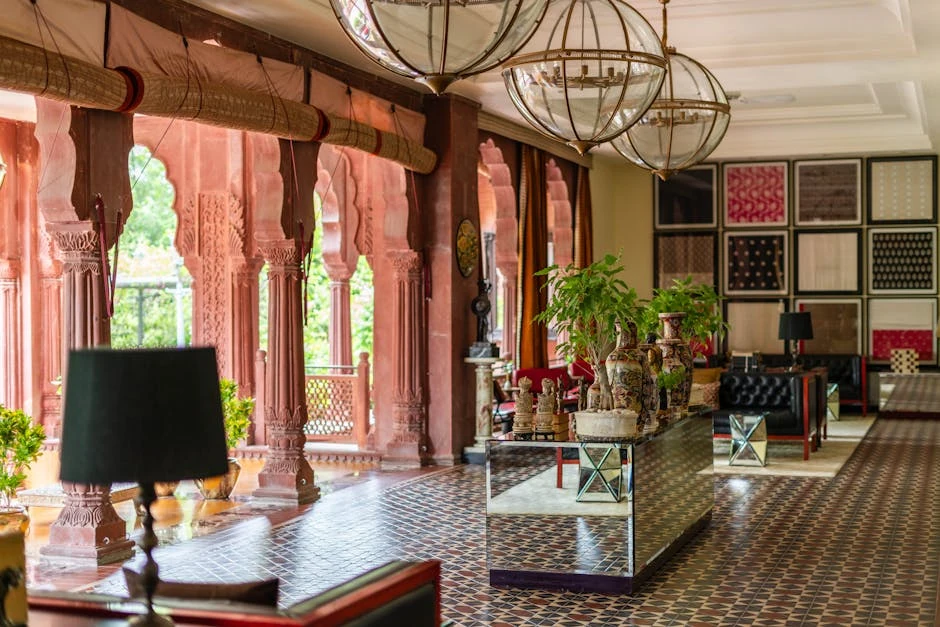
Featured B — Paradise City Resort (24-Hour Casino and F&B, Free Shuttle)
Paradise City is the integrated resort complex on Yeongjong-do — roughly five minutes from the airport terminal via the complimentary resort shuttle that runs on a continuous overnight loop — and it operates a 24-hour casino, a 24-hour lobby cafe, and a 24-hour hotel reception that collectively make it the largest 24-hour entertainment-and-dining venue anywhere in the broader airport area. The casino — and this is the operational point worth making — is foreigner-only by Korean regulatory structure, with passport-required entry for all non-Korean-citizen visitors, and the table-and-machine minimums run from roughly KRW 5,000 at the entry tier, which means the casino is genuinely accessible rather than gated to the high-roller demographic. The framing point worth making is that Paradise City is not on this list as a gambling recommendation — the casino is the operational anchor of the 24-hour register, but the editorially significant draw for the overnight transit traveler is the broader ecosystem of 24-hour amenities that the resort runs around the casino. The lobby cafe operates 24 hours with a calibrated menu of Korean and Western breakfast-and-light-meal options, the hotel reception handles same-day check-in availability for the redeye-arrival traveler who decides at 03:00 to take a proper room rather than push through the overnight at the airport, and the Wonderbox entertainment complex (which closes at 22:00 daily rather than operating 24 hours) and the Cimer hot-spring spa (which closes at 22:00 daily) provide the daytime-extension options for travelers whose layover window extends into the morning. The complimentary airport shuttle is the operational lubricant — the resort runs the shuttle on a roughly fifteen-to-twenty-minute frequency through most overnight hours, with timing posted at both the T1 and T2 arrivals halls and confirmed through the resort's reception desk at p-city.com/eng. For the magazine reader who has somewhere between four and ten hours of overnight transit and is calibrating between the inside-terminal Spa at Home option and the off-airport resort option, the calibration runs roughly as follows: if your window is under four hours, Spa at Home is the answer because the shuttle-time-plus-resort-time math does not work. If your window is four to six hours and you want the inside-terminal proximity-to-departure-gate operational safety, Spa at Home is still the answer. If your window is six to ten hours and you want the genuinely-different-environment experience that justifies leaving the terminal, Paradise City is the worth-trying alternative. If your window is over ten hours and you want a proper hotel-room sleep, Paradise City Hotel (separate from but co-located with the resort) is the operationally serious answer. The 24-hour casino is the secondary draw for the traveler who is awake at 03:30 and wants the genuinely-different-environment overnight experience — the casino floor is, by my unofficial assessment from multiple overnight observations, operationally interesting in the same magazine-grade-anthropological-curiosity register that the Las Vegas Bellagio casino floor is interesting at 04:00, with the cultural-specificity of the Korean-foreigner-only configuration adding the additional layer of editorial significance. The food-and-beverage options at the lobby cafe run honestly across the overnight hours — the breakfast menu opens at 06:00 but the light-meal-and-coffee program runs through the night, and the operational reliability of the kitchen is, in my repeat-visit experience, meaningfully better than what most international airport resort-side cafes deliver at 03:00. The visitkorea.or.kr listing at english.visitkorea.or.kr provides additional context for the broader resort programming.
- Location: Paradise City Yeongjong-do (5-minute free airport shuttle)
- Hours: Casino 24 hours; lobby cafe 24 hours; hotel reception 24 hours
- Price: Casino free entry, minimum bets KRW 5,000+; cafe variable
- Best for: 6+ hour overnight windows, off-terminal environment, hotel-room sleep option
- Skip if: Your layover is under 4 hours (shuttle math does not work)

Featured C — Convenience Stores (CU, GS25, 7-Eleven) Across T1 and T2
The Korean convenience-store category — primarily CU, GS25, and 7-Eleven across the airport — is the quietly-most-useful 24-hour facility tier in the building, and it operates at a service-and-product standard that the Western traveler arriving from a country with thinner convenience-store cultural infrastructure may, frankly, find genuinely surprising. The Korean convenience-store format is calibrated against a domestic retail standard where the convenience store is a substantive food-and-meal destination rather than the gas-station-adjacent quick-stop format that the American convenience-store category has settled into. The on-site food program runs the full breadth of the Korean convenience-store canonical lineup — kimbap rice rolls, ramen noodle cups with hot-water self-service stations, dosirak lunchbox sets, triangle-shaped onigiri-style rice snacks, and a rotating cast of seasonal limited-edition items that follow the domestic Korean calendar with admirable consistency. The pricing is meaningfully aggressive — a full kimbap roll runs roughly KRW 3,000 to KRW 5,000 (which translates to roughly two to four USD), a hot-water-prepared ramen cup runs roughly KRW 2,000 to KRW 4,000, and a substantive dosirak lunchbox runs roughly KRW 5,000 to KRW 8,000. The framing point worth making is that the convenience-store food program is, for the overnight transit traveler who has just spent thirteen hours on the long-haul inbound and wants a substantive light meal at 02:30 without committing to a sit-down kitchen, the operational answer that most international airports do not have. JFK does not have this answer. Newark does not have this answer. Heathrow has approximations that do not quite work. The Korean convenience store at Incheon at 02:30 is staffed, the hot-water station for ramen preparation is operational, the food refrigeration is at-standard, and the tap-to-pay processing handles foreign credit cards without friction. The product range extends meaningfully beyond food — the convenience stores carry the full breadth of travel-essential supplies including SIM cards, phone chargers, batteries, basic toiletries, over-the-counter medication, and the kind of small-format K-beauty volume-distribution items that the duty-free counter does not stock at single-item resolution. The 24-hour operational continuity is genuine and verified across multiple overnight transits — the staffing at most outlets continues through the overnight window without the shift-gap closures that the Western convenience-store equivalent often shows during the 02:00-to-05:00 dead-zone. The framing point worth making for the cultural-format gap is that the Korean convenience-store category includes an in-store seating component at many outlets — typically two to six counter-seat positions where customers can prepare their hot ramen, eat it on premises, and decompress in the standard convenience-store ambient rather than the sit-down-restaurant ambient. The Incheon airport outlets vary on whether the seating component is available — the larger T1 and T2 outlets typically have the seating, the smaller satellite outlets typically do not. For the magazine reader who has not previously experienced the Korean convenience-store food category, the Incheon outlet at 02:30 is the operational gateway that the in-Seoul convenience-store category has been training Korean consumers on for two decades. There is a particular thrill in eating a hot-water-prepared ramen cup at the T1 convenience-store counter seat at 03:00 with the inbound long-haul behind you and the onward connection ahead of you. Tribeca cannot do this. The bodega category in Manhattan approximates without quite reaching the standard, and the standard is what makes the Incheon overnight transit operationally serious.
- Location: T1 and T2 multiple floors (both landside and airside outlets)
- Hours: Most outlets 24 hours daily
- Price: Kimbap KRW 3,000-5,000; ramen cup KRW 2,000-4,000; dosirak KRW 5,000-8,000
- Best for: Overnight substantive light meals, travel-essential supplies, tap-to-pay convenience
- Skip if: You want a sit-down kitchen meal (try Spa at Home dining tier or Paradise City)
Featured D — Currency Exchange (T1 and T2 Multi-Bank 24-Hour)
The currency-exchange tier at Incheon is the under-discussed operational facility category that the magazine-side coverage routinely overlooks — and it is, for the redeye-arrival traveler who needs Korean Won at 03:00 for the AREX express ticket or the taxi-stand fare or the convenience-store purchase, the single most operationally critical 24-hour facility in the building after the information desk. Multiple banks operate 24-hour currency-exchange windows at both T1 and T2 arrivals and departure floors — KEB Hana Bank, Woori Bank, Shinhan Bank, and the smaller regional bank windows that rotate through the airport's competitive licensing structure — with the cumulative operational continuity meaningfully more robust than what the equivalent JFK or LAX 24-hour currency-exchange category delivers. The framing point worth making is that the Korean currency-exchange category operates at meaningfully more aggressive spreads than the international-airport baseline — typically running one to two-and-a-half percent below the mid-market spot rate rather than the four-to-six percent that the JFK or Heathrow airport-side currency-exchange counters habitually post — and the cumulative-saving for the overnight-arrival traveler who needs a substantive Won pickup at the airport is, frankly, not trivial. The airport-side aggregator at airport.kr operates a real-time currency-exchange rate-comparison page that lists the current rates across the multiple bank windows, which is the operational tool that the calibrated traveler uses to select the best-spread window of the morning rather than defaulting to the first-window-after-immigration. The 24-hour operational continuity is genuine — verified across multiple overnight transits — though the staffing model rotates such that the specific bank window operational at 03:30 may differ from the bank window operational at 14:00, and the magazine-grade-traveler-side calibration is to walk past the first two or three windows to compare the posted rates before committing. The minimum-exchange thresholds vary by bank but are typically calibrated to the small-traveler-friendly tier — most outlets handle exchanges as low as fifty USD without operational friction, and the tap-to-pay foreign-card exchange (where you can charge a foreign credit card and receive Won) is a category that the Korean banking infrastructure handles meaningfully better than the equivalent at most Western airports. The secondary operational point worth making is the ATM tier — multiple international-network ATMs operate 24 hours at both terminals, with the Global ATM network and the Plus and Cirrus international compatibility tags running on the standard major-bank ATMs and the airport-side machines respecting the daily withdrawal limits that the foreign-card-issuer-side limit-setting typically permits. For the magazine reader who is calibrating between the cash-exchange-at-the-window approach and the ATM-withdrawal-with-foreign-card approach, the calibration runs roughly as follows: the cash-window approach typically delivers better spreads than the foreign-card ATM withdrawal once the foreign-side ATM fee is calculated in, and the cash-window approach also avoids the foreign-card-issuer-side currency-conversion fee that most Western credit cards apply to ATM withdrawals. The exception is the high-end no-foreign-transaction-fee credit cards that the New York Times Wirecutter category has been advocating for, where the ATM approach becomes competitive. The official rate-comparison tool at airport.kr/ap/en/svc/exchangeRateInfo.do is the verification source for current-window-rate comparison and the operational-hours confirmation. The currency-exchange windows at the arrivals floor of both T1 and T2 are the first-stop operational facility that the overnight-arrival traveler should route through immediately after immigration clearance, before any onward transit or accommodation commitment.
- Location: T1 and T2 arrivals and departures floors (multiple bank windows)
- Hours: Most outlets 24 hours daily (KEB Hana, Woori, Shinhan)
- Price: Spread variable across banks (compare via airport.kr rate-comparison tool)
- Best for: Redeye-arrival Won pickup, multi-bank rate comparison, foreign-card cash exchange
- Skip if: You have a no-foreign-transaction-fee card and prefer ATM withdrawal
Featured E — Airport Information Desk and Lost & Found (24-Hour Multilingual)
The 24-hour information desk at T1 and T2 arrivals floors — co-located with the airport lost-and-found desk and the transit-visa assistance counter — is the single most operationally critical 24-hour facility in the building for the traveler whose overnight transit has gone genuinely sideways, and the multilingual staffing is meaningfully more serious than the equivalent at most international airports. The information desk handles the full breadth of airport-side assistance categories — current flight-status verification, gate-and-terminal-routing navigation, transit-visa eligibility and processing assistance for the unfortunate traveler whose connection paperwork has hit a regulatory snag, lost-luggage initial-reporting and tracking, lost-passport emergency assistance and embassy-routing, currency-exchange-window directing, and the broader category of disoriented-traveler operational support that the redeye-arrival window genuinely generates. The framing point worth making is that the language-support roster is unusually deep — English, Korean, Japanese, Chinese, Russian, and Vietnamese are the standard rotating languages with consistent 24-hour coverage, and the airport's additional-language tier (Arabic, Spanish, French, Indonesian) rotates through more variable shift coverage that the airport.kr information page documents at airport.kr/ap/en/svc/informationInfo.do. For the magazine reader whose overnight transit has hit the unfortunate operational complication — and these complications happen, across enough overnight transits, with meaningful regularity even to the calibrated traveler — the information desk is the operational triage center. The staff are trained for the broader category of redeye-traveler-in-difficulty support rather than the narrow flight-information register that most international airport information desks limit themselves to, and the operational empowerment to handle the consequential edge cases (genuine transit-visa-paperwork problems, lost-passport emergency routing, missed-connection rebooking-assistance routing) is meaningfully broader than the equivalent at JFK or Heathrow. The transit-visa-assistance component is the under-discussed operational tier — the K-ETA (Korea Electronic Travel Authorization) category and the various transit-visa-on-arrival exceptions that the Korean immigration framework permits run through this desk, and the desk's operational familiarity with the edge cases is the kind of thing that, for the unfortunate traveler whose transit-visa eligibility is unclear at 03:00, can be the difference between the onward-flight continuation and the operationally-stranded overnight stuck-at-Incheon scenario that the magazine-side coverage of airport horror stories habitually anchors around. The lost-and-found tier handles both the airport-side-recovery items (items left on the AREX train, in the immigration hall, at the baggage carousel) and the airline-handover items (items left on the inbound flight that the airline crew has handed to the airport lost-and-found rather than to airline-specific lost-property). The operational integration between the airport-side desk and the airline-specific lost-property offices is, in my repeat-visit experience, considerably more functional than the equivalent at most international airports, where the airline-side and airport-side lost-property categories are operationally siloed in a way that genuinely frustrates the lost-item recovery for the traveler caught between them. The information desk at Incheon handles the cross-jurisdictional routing without the operational friction. The secondary operational point worth making is the transit-baggage-storage tier — the desk can route travelers to the airport-side luggage storage facilities (which operate at variable hours across multiple operators rather than at a single 24-hour standard, with the airport.kr directory documenting current operator hours), and the staffing can advise on the operational viability of the various storage options for travelers with the inevitable carry-on-and-checked-baggage logistics complications. For the magazine reader who has not previously needed the information desk and is unsure whether the operational support is genuinely worth knowing about in advance, my Tribeca-editorial-desk advice is to know the desk exists and to know the operational scope is broader than the surface flight-information signage suggests. The day the desk becomes operationally critical is the day the calibrated traveler is grateful for the advance knowledge.
- Location: T1 and T2 arrivals floor (co-located with lost-and-found and transit-visa)
- Hours: 24 hours daily
- Price: Free service
- Best for: Lost-passport emergency, transit-visa assistance, missed-connection routing, multilingual support
- Skip if: Your transit is operationally straightforward (no edge-case complications)
“There is a particular thrill in eating a hot-water-prepared ramen cup at the T1 convenience-store counter seat at 03:00 with the inbound long-haul behind you and the onward connection ahead of you — Tribeca cannot do this.”
Jessica Cole, Editorial Desk
Frequently asked questions
Which of these five is best for a 4-hour overnight layover where I just want to sleep?
Spa at Home with the capsule-sleep-room upgrade. The KRW 50,000 capsule-room pricing buys roughly four hours of genuinely-private sleep with shower and locker access included, and the inside-terminal location eliminates the shuttle-time-plus-arrival-routing math that the Paradise City alternative requires. The communal-rest tier at the lower entry pricing also works for the budget-calibrated traveler willing to accept the cultural-format jjimjilbang environment over a private capsule.
Is Paradise City worth the shuttle ride versus staying in the terminal?
Only if your overnight window runs longer than six hours. The shuttle math is roughly twenty minutes round-trip plus the resort-side arrival and departure logistics, which means a four-to-five-hour layover loses an hour to transit overhead and leaves three to four hours at the resort. For windows over six hours, the resort delivers a meaningfully different environment with 24-hour casino, lobby cafe, and the option of a proper hotel-room sleep at the Paradise City Hotel. Under six hours, Spa at Home is the better operational answer.
Are the 24-hour convenience stores really food-grade or are they just snack and drink counters?
Genuinely food-grade by Korean convenience-store standards. The on-site kimbap rolls, hot-water-prepared ramen cups, and dosirak lunchbox sets run roughly KRW 3,000 to KRW 8,000 and constitute substantive light meals rather than snack approximations. The Korean convenience-store category operates at a meaningfully higher food-program standard than the American convenience-store equivalent, and the airport outlets reflect the domestic Korean baseline rather than the international-airport-snack-counter baseline that JFK or Heathrow defaults to.
What is the difference between the 24-hour currency exchange windows and just using an ATM?
The cash-window currency exchange typically delivers better effective spreads than the foreign-card ATM withdrawal once the ATM fees are calculated in. Korean airport-side currency-exchange windows run roughly one to two-and-a-half percent below mid-market spot rate, which is meaningfully more aggressive than the four-to-six percent spread typical at JFK or Heathrow. The exception is the no-foreign-transaction-fee credit-card category, where the ATM approach becomes competitive. Compare current rates via the airport.kr rate-comparison tool.
Can the 24-hour information desk really help if I have a lost passport at 3:00 in the morning?
Yes — the information desk handles transit-visa emergency assistance and lost-passport embassy-routing as standard categories rather than edge-case exceptions, with multilingual staffing across English, Korean, Japanese, Chinese, Russian, and Vietnamese on the 24-hour rotation. The operational empowerment to escalate to the airport-side police and immigration desks is built into the desk's training, and the cross-jurisdictional routing between airport-side and embassy-side processing is meaningfully more functional than the equivalent at most international airports.
Are there other 24-hour facilities at Incheon worth knowing about that did not make this list?
Yes — and this is the methodology disclosure. The airport runs roughly fifteen genuinely 24-hour facilities across T1 and T2, and many are perfectly fine. Honorable mentions: 24-hour pharmacy windows at limited outlets (verify current hours via airport.kr), 24-hour international-network ATMs across multiple banks, 24-hour international taxi stands at both terminals, 24-hour smoking lounges at designated outdoor and airside locations. Five is the number that survives editorial scrutiny rather than the number that fills a directory.
How does Incheon's 24-hour operational depth compare to other major Asian transit airports?
Genuinely better than most. Singapore Changi runs a meaningfully thinner overnight operational register despite the airport's overall reputation. Tokyo Narita and Haneda close most facilities during the overnight window. Hong Kong International runs limited overnight operations. Doha Hamad and Dubai International run substantive 24-hour operations comparable to Incheon. Incheon's domestic-Korean 24-hour cultural baseline drives the operational depth in a way that most international airports do not replicate. The convenience-store category is the under-recognised differentiator.
Where can I verify current operational hours and emergency contacts?
The Incheon Airport official site at airport.kr lists current 24-hour facility hours, floor maps, and emergency contact numbers for T1 and T2. The information page at airport.kr/ap/en/svc/informationInfo.do documents the multilingual staffing schedule for the information desk. The currency-exchange rate-comparison tool at airport.kr/ap/en/svc/exchangeRateInfo.do tracks current rates across the multiple bank windows. The VisitKorea reference at english.visitkorea.or.kr provides broader Korea travel context.