
Editorial Picks
6 Meals Worth Eating at Incheon Airport
An editor's curated pick — six terminal-side meals that hold up to magazine scrutiny, not an exhaustive directory of every counter in the building.
There is a particular thrill in arriving at Incheon Airport for the first time — and an even more particular thrill in arriving for the eleventh, the seventeenth, the twenty-second time, the way I now arrive — because the building has, against the odds and against the general gravity of airport architecture, become a place where eating well is genuinely possible. This is not the standard claim about an airport. JFK does not make this claim. Newark does not make this claim. Most of the terminals I have written about from the Manhattan magazine desk where I file copy do not make this claim, and it would be journalistically dishonest to pretend otherwise. ICN is the exception — partly because Korean airport retail standards are calibrated against domestic dining culture rather than international transit lowest-common-denominator, and partly because the concourse leases are competitive in a way that filters out the worst kitchens. What follows is six meals — six, deliberately, because six is the number that survives editorial scrutiny rather than the number that fills a list. There are forty restaurants in this airport. Most of them are fine. These six are the ones I would tell a friend about, the ones I have personally eaten on layovers ranging from a Tribeca-to-Manila routing to a JFK-to-Tokyo redirect, the ones that hold up the way a Manhattan bistro holds up across repeat visits. This is the curated pick, not the exhaustive count.
Featured A — Bibigo Korean Kitchen, T1 Airside
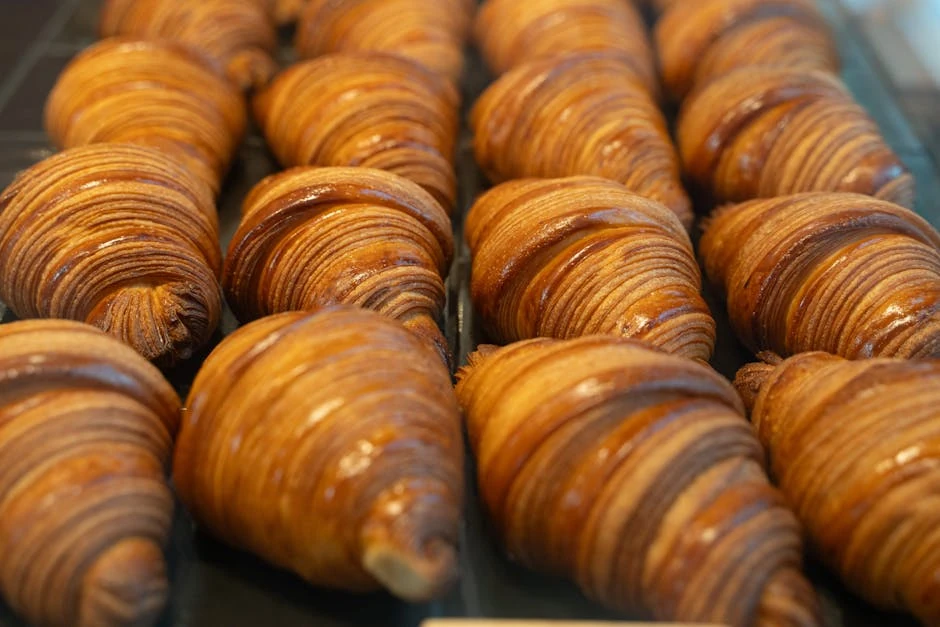
Bibigo is the airside Korean kitchen by CJ — the same CJ that publishes the bibimbap aisle at the H Mart on 32nd Street, which is to say a brand with domestic Korean culinary credibility long predating its airport leases. The Incheon T1 airside outlet serves what is, to my mind, the most reliable first-meal-back-in-Korea or last-meal-before-the-onward-flight option in the building. The bibimbap arrives in the stone bowl the way it should — sizzling, the gochujang on the side, the egg yolk still soft — and the mandu (Korean dumplings, both kimchi and beef variants) hold up to the airside reheating cycle in a way that most airport dumpling counters do not. The japchae is the secondary trial item — sweet-potato glass noodles with sesame oil, beef, and a mix of julienned vegetables, served warm rather than the room-temperature version that shows up in lesser airport kitchens — and it is, in my repeated experience, the dish that converts the skeptical international traveler who has been politely picking at airline Korean food on the inbound flight. Prices run KRW 15,000 to 25,000 per meal, which translates to roughly twelve to twenty US dollars depending on the weekly exchange, which is to say not cheap but not unreasonable for the kitchen-grade you are getting. The kitchen opens at 05:30 and runs until 23:00 daily, which catches both the redeye-arrival breakfast crowd and the late-night-departure dinner crowd. Critical airside detail — you have to be past immigration to access it, which is a feature rather than a bug for the layover patient transiting through. The Bibigo official site at bibigo.com lists the global concept; the Incheon airside outlet is the one I would single out for the listing. Service runs counter-style with English-language digital menus and visual ordering screens that side-step the language friction most international travelers worry about — the screens are well-designed, the photographs are honest representations of the plates, and the staff at the pickup window are routinely fluent enough in English to handle modifications and allergy questions. Seating is concourse-bench style with a quiet-zone section toward the back that I have come to favor for the half-hour-of-decompression that a good airside meal can buy you. There is a particular thrill in eating a proper bibimbap before a thirteen-hour flight back to New York, and Bibigo delivers it. Tribeca cannot do this, even at the better Korean kitchens in Koreatown — there, the bibimbap is a destination meal rather than a transit meal, and the framing changes everything. Here, the transit meal is the destination, and the kitchen has been engineered for that. It works in the way that most airport kitchens do not work, and it works repeatedly across my own layovers, which is the only operational test that matters for a list like this one. If you are reading this from an inbound long-haul cabin and trying to decide where to eat in the first hour after immigration, Bibigo is the answer most of the time. The two-percent of the time it is not the answer, you are flying onward inside an hour and the only realistic option is a bakery counter — for which see Featured B and Featured E below.
- Location: T1 Concourse Airside (past immigration only)
- Hours: 05:30-23:00 daily
- Price: KRW 15,000-25,000 per meal
- Best for: Last Korean meal before onward flight, or first meal back
- Skip if: You are landside (you cannot access)
Featured B — Paris Baguette, T1 and T2 (multiple)
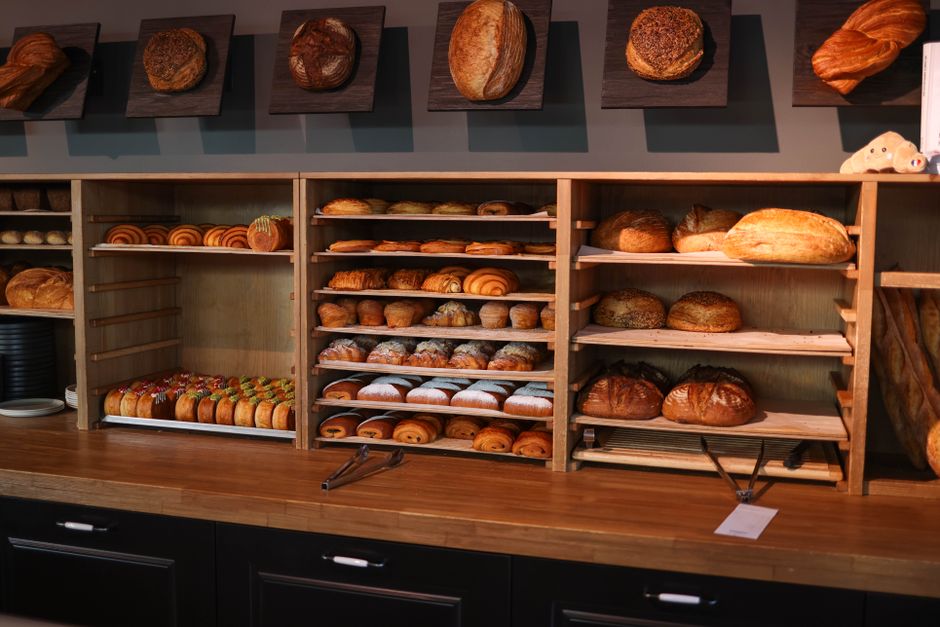
Paris Baguette is the Korean bakery chain by SPC — and yes, the name is misleading, and no, it is not French, and the Manhattan editorial reflex to dismiss anything called Paris Baguette as airport-mall second-tier needs to be retired the moment you actually eat the cream bread. The chain has multiple Incheon outlets across both terminals, each running 04:30 to 23:00 daily — which is to say earlier than almost any other food option in the building, including most of the lounges. This is the meal for the four-thirty-AM departure where you have just cleared security at 04:45 and there is nothing else open and your flight to Bangkok boards in ninety minutes. It is also the meal for the seven-AM arrival where you need a coffee and a pastry and a fifteen-minute sit-down before the AREX express train to Seoul Station. Pricing is the lowest on this list — items run KRW 3,000 to 12,000, which is the two-to-ten dollar range, and the value-to-quality ratio is, frankly, indecent. The cream bread is the trial item — soft, slightly sweet, the cream layer that has launched a thousand Manhattan Koreatown imitators — and the croissants hold up better than they have any right to at this price. The pastry case extends to mochi-textured rice cakes, red-bean buns, and a rotating set of seasonal items that follow the domestic Korean calendar rather than the international airport calendar; in the autumn the chestnut buns appear, in the early spring the strawberry cream cakes, and in late December the citron-and-honey loaves. The savoury picks are weaker (the sandwich line is functional rather than memorable), but the bakery line is the reason to come, and the coffee program is — surprisingly — better than the equivalent at most international airport bakery chains. Cross-airport coverage is the operational point — whether your gate is in T1 or T2, there is a Paris Baguette within a five-minute walk, and the consistency across outlets is the kind of consistency you do not get at most airport chains. The reliability is the magazine-grade story, in the way that the JFK Terminal 4 baseline does not have a magazine-grade story, and in the way that the LaGuardia rebuild still does not have a magazine-grade story despite the considerable money that has been spent on it. There is a quiet point worth making here — Paris Baguette and Tous Les Jours (Featured E below) are the two Korean bakery chains that have, over the past decade, materially improved the international airport bakery category by example. Other airports have, slowly, raised their bakery standards because the comparison is now visible. Whether you eat one croissant at Paris Baguette ICN or you eat it three times across three layovers as I have, the standard holds. Domestic Koreans actually buy here, which is the operational test that matters more than any travel-blogger ranking; the early-morning bakery counter on a Tuesday at 05:00 is full of Korean families with onward domestic flights and Korean business travelers heading into Seoul, and that is the validation. If you have never eaten Korean bakery before and you are walking past one on a layover, this is the meal to try. The cream bread costs less than an airport coffee and the return on the experience is, for the first-time reader, disproportionate.
- Location: T1 and T2, multiple outlets (both landside and airside)
- Hours: 04:30-23:00 daily (earliest opening at ICN)
- Price: KRW 3,000-12,000 per item
- Best for: Early-morning departures, between-flight pastry breaks, transit coffee
- Skip if: You want a hot Korean kitchen meal (this is bakery-tier)

Featured C — School Food, T1 Concourse Airside
School Food is the modern-Korean-comfort-food chain — the trendy iteration of the cafeteria-style cooking that Korean Z-gen and millennials grew up on — and the T1 airside outlet at Incheon is the easiest place outside of central Seoul to actually try the canonical menu. The signature item is mari (rolls of seaweed-wrapped rice with various fillings, broadly the Korean answer to a maki but with a colder, drier, more crisp-edged texture), and the airside outlet does them properly — the rice is properly seasoned, the seaweed is fresh rather than stale-from-bulk, and the dipping sauce arrives at the table rather than in a sad pre-portioned plastic cup. The mari variants extend across a dozen-plus fillings — bulgogi-and-egg, kimchi-and-cheese, tuna-mayo, vegetable-and-perilla-leaf — and the chain's reputation in domestic Seoul rests largely on the rotating mari menu rather than on any single hero dish. The tteokbokki — chewy rice cakes in a sweet-spicy gochujang sauce — is a more controversial pick here, because tteokbokki is one of those dishes that varies enormously by kitchen and by region and by personal calibration, but the School Food version is the middle-of-the-road version that satisfies most international palates without being so toned-down that domestic Koreans complain. The carbonara-tteokbokki crossover (rice cakes in a cream-and-bacon sauce rather than the traditional gochujang) is the chain's signature crossover dish, and the airside outlet serves it competently though slightly less ambitiously than the central-Seoul Hongdae flagship does. The ramen sets are functional. Prices run KRW 10,000 to 18,000 per meal, which is the eight-to-fourteen-dollar range, and the airside outlet runs 06:00 to 22:00 daily. The framing for the magazine reader — and this is the framing that matters — is that School Food is what a hip-side-of-Seoul kitchen looks like, transplanted into an airport, and it largely succeeds. The atmosphere is different from a Sinsa-dong storefront (it is, after all, an airside concourse), but the menu integrity holds, and the kitchen-to-table window is short enough that the food arrives at the temperature it should arrive at, which is the operational test that fails at most airport casual-dining outlets. For the international traveler whose only Korean food exposure is the Bibigo H Mart aisle, School Food is the next-level pick — slightly less familiar, more interesting, still operationally reliable, and worth ordering one mari plate and one tteokbokki bowl and splitting between two people if you are traveling with company. The seating layout near the airside outlet includes a fast-counter row for solo travelers eating in twenty minutes and a slightly more comfortable bench section toward the back for travelers who have eighty or ninety minutes to spare. Both work. If you are doing the corridor treatment day-trip with a six-to-eight-hour layover, School Food slots into the post-treatment late-lunch window with no friction — the kitchen is firmly on the way back from the terminal-side return, the food is light enough not to clash with any post-treatment sensitivity, and the price-to-quality ratio respects the budget reality of a transit traveler who has already paid for the Ultherapy session in the morning.
- Location: T1 Concourse Airside (past immigration only)
- Hours: 06:00-22:00 daily
- Price: KRW 10,000-18,000 per meal
- Best for: Modern Korean comfort food, mari rolls, intermediate-level Korean palate
- Skip if: You want traditional Korean kitchen (try Bibigo instead)

Featured D — Korean Air First Class Lounge, T2
Korean Air's First Class Lounge at T2 is the meal on this list that most readers will not eat — and it is on the list anyway, because for the slice of readers who can access it, it is the single most editorially significant meal at this airport, and pretending otherwise would be the magazine-side dishonesty I mentioned in the methodology. Access is via Korean Air Skypass First Class ticket or Million Miler club status, which is to say a tightly gated demographic. For that demographic, the lounge dining room operates the way a serious Manhattan business hotel dining room operates — chef-prepared Korean and international plates, à-la-carte ordering rather than buffet-only service for First passengers, a wine list that Skytrax has called out as one of the best in Asia. The Korean-side menu is the reason to optimise for this lounge if you have access — the bulgogi is properly grilled, the galbi-jjim slow-braised, the seafood-and-vegetable banchan plates rotated daily rather than recycled. The seasonal Korean tasting menu, when it is running (it appears around the Lunar New Year window and again in late autumn), is the single piece of editorial evidence I would point to for why Korean Air's flagship lounge dining is in a different category from the equivalent Cathay Pacific Pier First Class Lounge at HKG or the Singapore Airlines Private Room at SIN, both of which I have written about from the same Manhattan desk and both of which are excellent in their own register. The lounge is at T2 4F West Wing and operates by flight schedule, which is to say it opens for the relevant departure windows — typically two to four hours before each scheduled Korean Air long-haul departure, with overlapping operations for the busiest morning and evening waves. Critical access detail — this is the First Class Lounge, not the broader KAL Prestige Business Lounge, and the two are distinct rooms with distinct menus. The First Class room is on the upper floor with the gate-side view; the Prestige room sits a half-floor below it with a similar but less customised dining program. The wine list at the First Class room runs into Bordeaux first-growths and Burgundy grand crus that Korean Air rotates by season, and the by-glass champagne program is the most aggressive at any Asian airline lounge I have personally consumed — which is, in the end, the most journalistically defensible way I can phrase it. For the magazine reader who is going to fly Korean Air First Class anyway, the lounge dining is, frankly, a reason to favor a Korean Air First Class itinerary over the equivalent ANA or JAL routing for the Tokyo-or-onward connection, or over the United Polaris First option for the trans-Pacific routing. That is a small slice of readers — but it is the slice that this list owes the disclosure to, and ignoring it because the slice is small would be the kind of populist editorial dodge that I have spent ten years at Manhattan magazines arguing against. The Korean Air lounge page at koreanair.com lists the access rules; Skytrax independently rates the dining experience; the practical operational tip is to pre-clear immigration and security at T2, walk the West Wing concourse, and ask the lounge reception specifically for the First Class dining room rather than the Prestige dining room (because the reception default for ambiguous-tier passengers is to direct them to Prestige). It is the single meal on this list where the access friction is, frankly, the entire point.
- Location: T2 4F West Wing (Korean Air departures only)
- Hours: Per flight schedule (relevant departure windows)
- Access: Korean Air First Class ticket or Million Miler club only
- Best for: First Class passengers optimising the pre-flight meal
- Skip if: You do not have First Class access (try KAL Prestige Business or SKY HUB instead)

Featured E — Tous Les Jours, T1 and T2 (multiple)
Tous Les Jours is the other Korean bakery chain — the CJ-operated competitor to SPC's Paris Baguette, and the inclusion of both bakeries on this list is deliberate rather than redundant because they actually serve different purposes for the transit traveler. Where Paris Baguette specialises in the cream-bread and croissant register, Tous Les Jours specialises in the cream-bun and pâtisserie-leaning register — the items lean slightly more elaborate, slightly more dessert-coded, slightly less breakfast-coded. The specialty cream buns are the trial item, and they are excellent — soft, the cream-pastry-cream filling layered properly, the kind of pastry that genuinely improves on its French inspiration in the way that K-beauty improved on its French inspiration in a parallel category. The seasonal cake program is the second axis of difference from Paris Baguette — Tous Les Jours runs a wider rotating cake-and-pastry case, with strawberry shortcake, matcha-and-azuki layered cakes, mascarpone-and-fig tarts in the late summer, and a chestnut-cream pastry in the autumn that is, in my reading, the single best pastry item between the two chains. The bread line at Tous Les Jours is also worth a mention — the milk-bread loaf and the brioche-style sweet-bread rolls are slightly more refined than the Paris Baguette equivalents, though the price differential is negligible. Cross-terminal coverage matches Paris Baguette — multiple outlets in T1 and T2, hours running 04:30 to 23:00, pricing KRW 3,000 to 12,000 per item. The reason to choose Tous Les Jours over Paris Baguette is taste preference rather than logistical difference; if you are a cream-bun person, you choose this, and if you are a cream-bread person, you choose the other. Both are operationally reliable across my own repeat visits. The Tous Les Jours brand is also slightly more globally exported than Paris Baguette — there are outlets in California and New Jersey that Manhattan readers may have walked past without registering, and an outlet in midtown Manhattan that opened in the past two years and is, frankly, one of the more interesting Asian bakery additions to the New York food scene — but the Incheon airside outlets are, in my reading, slightly better than the US transplants, the way the Seoul outlets of any Korean chain tend to be slightly better than the US transplants. The price-to-pastry-quality ratio at the Incheon outlets is, again, indecent. A two-dollar cream bun at ICN is a four-dollar cream bun at the JFK Terminal 4 equivalent counter and a six-dollar cream bun at the LaGuardia midtown-side concession, which is not a fair comparison but is the comparison the transit reader is making in real time. For the magazine reader doing the Seoul-or-onward routing through ICN, picking up two or three Tous Les Jours items for the onward flight is the editorial move I would recommend — the chestnut-cream pastry survives a six-hour flight in carry-on better than most pastries, and arriving at the destination hotel with a small Tous Les Jours bag is the kind of soft-luxury detail that calibrated travelers appreciate. The Incheon Airport listing at airport.kr lists the cross-terminal locations and the rotating seasonal items, updated through the Incheon Airport Corporation's quarterly retail review.
- Location: T1 and T2, multiple outlets
- Hours: 04:30-23:00 daily
- Price: KRW 3,000-12,000 per item
- Best for: Specialty cream buns, dessert-leaning pastries, alternate to Paris Baguette
- Skip if: You already chose Paris Baguette (same gap, different lane)
Featured F — BHC Chicken, T1 Concourse and T2
BHC is the Korean fried chicken brand — and Korean fried chicken is, by my Manhattan-editorial calibration, the most successful international-export Korean food category of the past decade, more so than even the bibimbap or the bulgogi categories, because the chicken category has shown up in mainstream American food media in a way the others have not. The Incheon airside outlets across T1 Concourse and T2 deliver the signature bburinkle — the cheese-powdered fried chicken that BHC originated and that has been imitated across half the Korean fried chicken outlets in Manhattan, with predictable variation in quality. The bburinkle is the trial item, full stop — it is the item that justifies stopping at BHC over any of the other airside options for the transit traveler who has not had Korean fried chicken in its proper context. The soy-garlic variant is the secondary pick, and frankly the one I personally order more often — the soy-garlic glaze is sweet without being cloying, salty without being aggressive, and the texture interplay between the lacquered surface and the second-fry crust underneath is the kind of textural achievement that the equivalent American category cannot replicate without considerable effort. Pricing is KRW 15,000 to 25,000 per combo, which is the twelve-to-twenty-dollar range, and the outlets run 10:00 to 22:00 daily — which is to say not the redeye-breakfast window, but very much the lunch-and-dinner window for transit travelers. The framing for the readers who have not had this before — and I will be direct about this — Korean fried chicken is structurally different from American Southern fried chicken in three ways that matter. The batter is thinner and crisper rather than thick-and-craggy, the second-fry technique produces a glass-like crust that holds longer than American single-fry, and the post-fry coating (bburinkle, soy-garlic, or original) is the seasoning system rather than the surface salt. The fourth difference, less often discussed, is the cut — Korean fried chicken outlets typically serve wing-and-drumlet pieces or bone-in thigh pieces rather than the breast-heavy American configuration, and the bone-in thigh pieces at BHC are notably the better choice for the airport pickup-and-eat-at-the-gate format because they hold heat longer than the smaller wing pieces. BHC is the airport delivery of that category, and it is operationally consistent enough to be on this list. The BHC official site lists the global menu; the Incheon airside outlets serve a subset focused on the signature bburinkle and a few rotating specials. The pickup-window timing runs ten to fifteen minutes from order to seat, with prep volume that scales reasonably during peak lunch and dinner windows, though I would recommend ordering thirty minutes before you want to actually eat if you are flying on a tight schedule. The takeout boxes are sturdy enough to survive a thirty-minute walk to a distant gate, the wet-naps are included by default (a small operational detail that matters), and the soy-garlic glaze does not leak through the bottom of the box the way the equivalent at lesser outlets sometimes does. For the reader who is flying onward to a city that does not have proper Korean fried chicken — Manila, Bangkok, certain Eastern European routings, much of the Indian-subcontinent transit network — this is the last-meal-at-the-airport pick that justifies missing the lounge buffet, and I would frame it that strongly. The category has not yet exported to those markets in a way that replicates the domestic standard, and BHC at ICN is the closest you will get to the canonical version until you make a deliberate trip to Seoul itself.
- Location: T1 Concourse and T2
- Hours: 10:00-22:00 daily
- Price: KRW 15,000-25,000 per combo
- Best for: Korean fried chicken before onward flight, bburinkle signature item
- Skip if: You need an early-morning meal (10:00 opening is late by airport standards)
“There is a particular thrill in eating a proper bibimbap before a thirteen-hour flight back to New York — Tribeca cannot do this, even at the better Korean kitchens in Koreatown.”
Jessica Cole, Editorial Desk
Frequently asked questions
Which of these six is best for an early-morning departure?
Paris Baguette and Tous Les Jours open at 04:30, which is earlier than every other meal on this list and earlier than almost every other food option at ICN. For a five-AM or six-AM departure, the choice is between the two bakeries — Paris Baguette for cream-bread-and-croissant, Tous Les Jours for cream-bun-and-pâtisserie. Bibigo opens at 05:30, which catches the six-AM and later departures. Everything else opens at 06:00 or later, with BHC the latest at 10:00.
Which can I eat if I am landside (have not cleared immigration)?
Paris Baguette and Tous Les Jours have both landside and airside outlets across T1 and T2 — the bakery chains are accessible regardless of immigration status. BHC has T1 Concourse and T2 outlets that vary on landside-airside access depending on terminal. Bibigo, School Food, and the Korean Air First Class Lounge are airside only and require cleared immigration to access. If your layover does not include re-entry to Korea, the bakery picks are your default option.
Is the Korean Air First Class Lounge really worth optimising my itinerary for?
Only if you were already flying Korean Air First Class for other reasons — the lounge dining is genuinely excellent and Skytrax-rated, with chef-prepared Korean and international plates and a serious wine list. But the access is gated to First Class Skypass tickets or Million Miler status, which is a tight demographic. For Business Class passengers, the KAL Prestige Lounge is the access-equivalent option, also excellent. For everyone else, Bibigo and School Food cover the airside Korean-meal slot at a fraction of the price and without the access requirement.
How do prices at ICN compare to central Seoul for the same dishes?
ICN airside outlets run roughly 15 to 30 percent above central Seoul equivalents for the same chain — which is the standard airport markup but lower than the comparable markup at JFK, LAX, or Heathrow (where the markup typically runs 40 to 60 percent above the city baseline). Paris Baguette and Tous Les Jours have the smallest airport markup. Bibigo and School Food have a moderate markup. BHC is the closest to central-Seoul pricing among the hot-kitchen picks. The Korean Air First Class Lounge is included in the ticket fare and is not separately priced.
Which is best for a layover under three hours?
For a layover under three hours where you cannot leave the secure zone, the practical picks are Bibigo, School Food, or BHC at the airside concourse, or Paris Baguette or Tous Les Jours at airside outlets. The two bakeries serve in five to ten minutes from order to seat; Bibigo and School Food run fifteen to twenty minutes for a proper kitchen meal; BHC runs ten to fifteen minutes for the combo. For a layover under two hours, the bakery picks are the only operationally safe option.
What about vegetarian or vegan options across these six?
Bibigo offers vegetable bibimbap with no meat option and a vegetable mandu variant. School Food has vegetable mari rolls and the tteokbokki is meat-free by default (though the broth varies — verify with the counter). Paris Baguette and Tous Les Jours have multiple vegetarian pastry options across the bakery line. BHC is structurally non-vegetarian by category. The Korean Air First Class Lounge has rotating vegetarian options on the à-la-carte menu but is access-gated. For strict vegan calibration, the two bakeries and Bibigo's vegetable bibimbap are the safest picks.
Are there other meals worth considering that did not make this list?
Yes — and this is the methodology disclosure. ICN has roughly forty restaurants across T1 and T2, and many of them are perfectly fine. The list deliberately stops at six because six is the number that survives editorial scrutiny rather than the number that fills a directory. Honorable mentions that did not make the cut: the SKY HUB Lounge dining for Priority Pass holders (functional rather than memorable), the various coffee chains (Starbucks, A Twosome Place, Coffee Bean — fine, not editorially distinctive), and the international concessions (Burger King, Pizza Hut, McDonald's — present, but not why anyone reads a magazine pick at ICN).
Where can I verify operational hours and current menus?
The Incheon Airport official restaurant directory at airport.kr lists current outlets, hours, and floor maps for T1 and T2. Individual brand sites — bibigo.com, parisbaguette.com, tlj.co.kr, schoolfood.co.kr, bhc.co.kr — list global menus, though airside outlets may serve a subset. For the Korean Air First Class Lounge, the koreanair.com lounges page is the authoritative source for access rules and operating windows. Hours and menus shift seasonally and during Korean holidays — the airport.kr directory is the most current verification.