Editorial Picks
How to Choose an ONDA Body Contouring Clinic Near Incheon Airport — 2026 Guide
An editorial survey of micro-wave body work along the Incheon-Seoul corridor — measured, physician-led, calibrated for arriving travellers.
Incheon International unfolds with a particular rhythm one comes to recognise — the long glass corridors, the rail platforms at B1, the seventy-minute window into Gangnam if traffic behaves, the quiet rush of a Friday-evening AREX. Body contouring, in this corridor, is a category the better Korean clinics handle with restraint; ONDA, the micro-wave platform from Korean manufacturer Classys, sits at the centre of that conversation. The protocol delivers controlled deep-tissue heating to the subcutaneous adipose layer, prompting fat-cell apoptosis and collagen remodelling over the following six to twelve weeks — non-invasive, no incisions, no anaesthesia, no overnight admission required. What separates the practices below is not the device itself, which is the same hardware across the rooms, but the operator's calibration, the willingness to map abdomen and flanks before each pass, and the multilingual aftercare that survives the patient's flight home. The list is editorial, not ranked; one reads it for texture rather than tier, and for the rhythm of how each clinic positions body work within its broader menu.

What to look for in an ONDA body contouring practice near Incheon
An ONDA body protocol — the kind worth the corridor commute from the airport — rests on three quiet pillars. The first is operator calibration: the senior physician should mark the treatment zones before the handpiece is engaged, with energy parameters adjusted for subcutaneous depth on the abdomen versus the flank rather than run as a single uniform pass. The second is supervisory continuity: the same operator should perform the session, review the four-week response, and adjust the next pass on actual tissue feedback rather than on a printed protocol. The third is logistics: a coordinator who can confirm an airport pickup, pre-fill the consent forms in the patient's language, and book the follow-up at six weeks before the patient leaves the lobby. ONDA is a device, not a result; the result is the operator's reading of the device. Korean medical law requires the procedure to be physician-administered, which raises the floor for international visitors arriving via Incheon — what separates the better practices from the rest is what sits above that floor, particularly the willingness to refuse a session when the indication does not call for it. One learns to value the consultation that takes forty minutes rather than ten, and the coordinator who has read the case file before the patient steps off the train at Seoul Station.
Eight practices worth a closer reading along the Incheon-Seoul corridor
What follows is an editorial discovery — not a ranking. Each entry has been read for the texture of its body-contouring practice rather than its marketing. The order reflects the natural arc of an unhurried trip from arrivals at Terminal 1, into the city, and back out again; nothing more.
Lydian Plastic Surgery (Seoul) 💬
Lydian is a body-focused surgical practice whose director has performed liposuction since 2001, with a proprietary 5D liposculpting technique taught to other operators since 2011. Non-surgical ONDA passes are typically positioned as adjunct rather than primary work here. A multilingual doctor handles English, Chinese, Japanese, and Tagalog directly, and the practice holds an Advanced Regenerative Medicine clinic designation.
Re:Berry Skin Clinic (Incheon Airport) 💬
Re:Berry maintains an Incheon Airport-corridor practice carrying an Advanced Regenerative Medicine Center designation, frequently chosen by returning international patients arriving from the United States, Japan, Taiwan, and Southeast Asia. ONDA body work sits within a broader non-surgical lifting menu, with airport pickup handled directly by the medical-tourism coordinator and a WhatsApp aftercare line that survives the patient's flight home.
Cellin Clinic Myeongdong
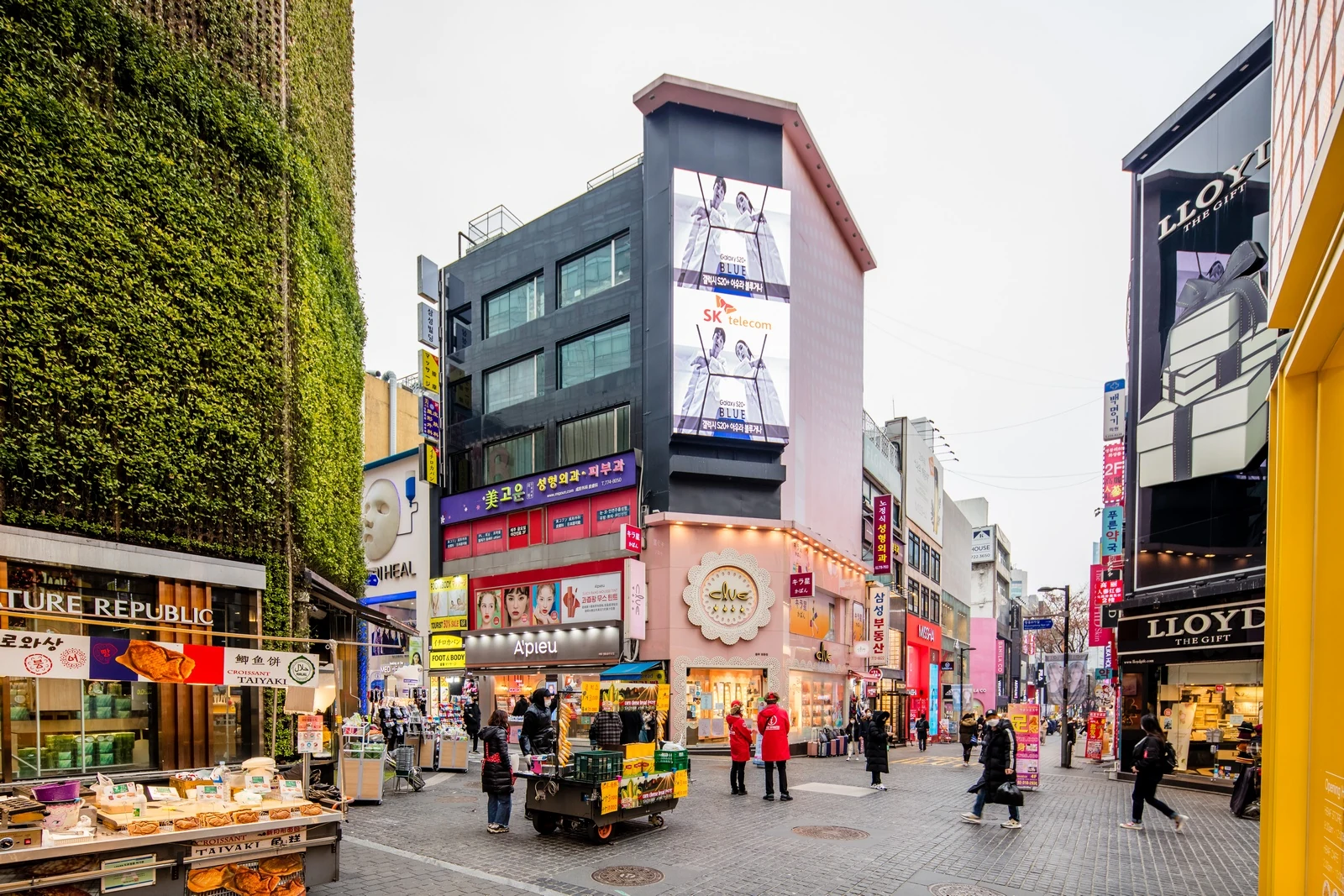
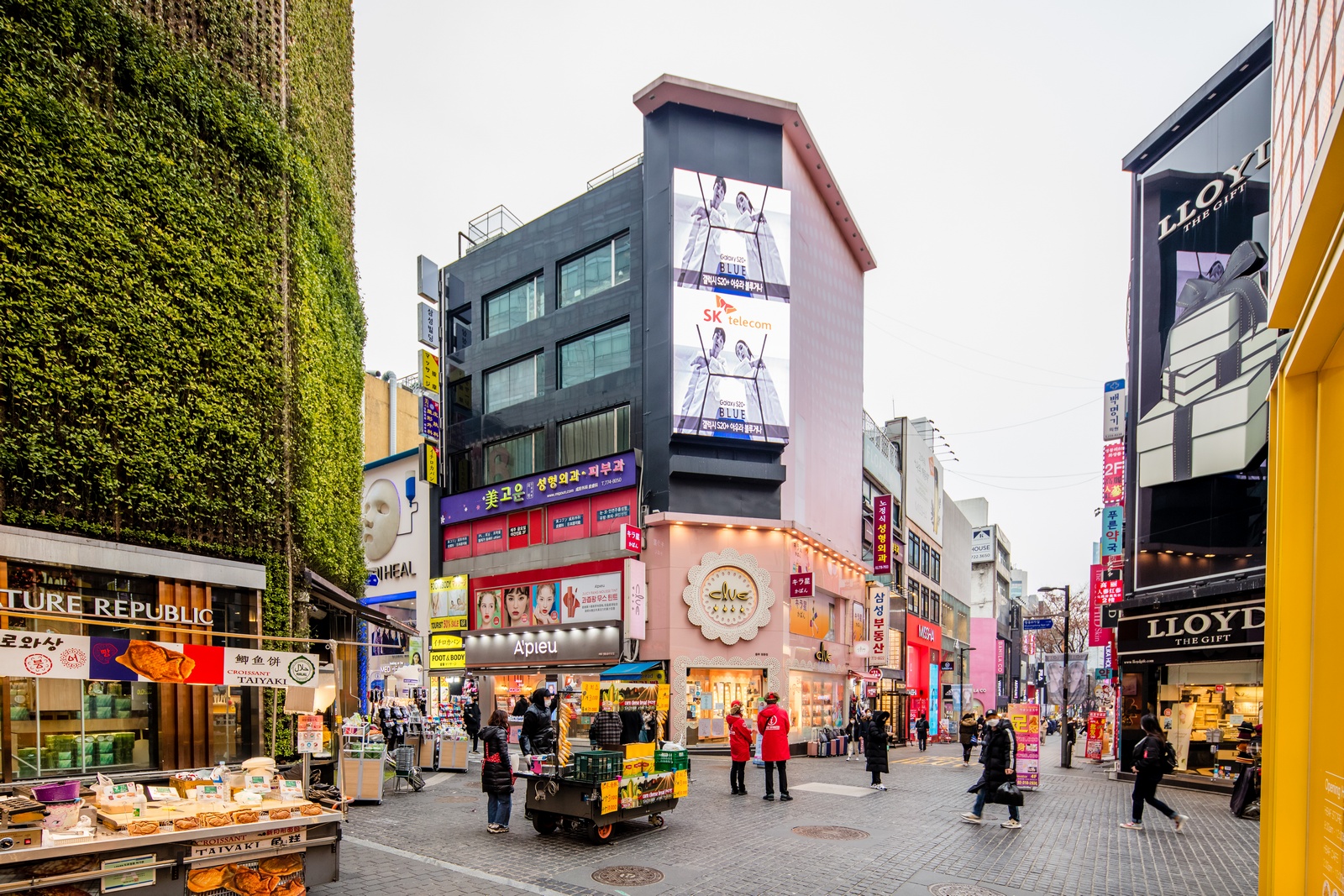
Cellin is a dermatologist-led Myeongdong practice whose medical director, Dr. Kyoung-min Min, trained at Seoul National University and holds memberships across KASLS, KOAT, KALDAT, and KFERA. ONDA sits alongside Ultherapy Prime and Thermage FLX on a curated lifting menu calibrated for international patients. The location reads as Myeongdong-walkable from the AREX line, suiting day-trip visits.
The Beautiful Skin Clinic (Gangnam) 💬
The Beautiful Skin Clinic (Gangnam) has been operating since 2009 with what the practice describes as over two decades of accumulated clinical experience in Korean dermatology. ONDA lifting sits alongside RF microneedling, Thermage, Ultherapy, and thread-lift work on a long-running menu. The clinic's house style favours measured, multi-session programmes over single-pass intensity, with English-language coordination available on advance request.
Lijin Clinic (Myeongdong) 💬
Lijin is a premium aesthetic practice in operation since 2011, with Chief Director Dr. Hwang carrying fifteen years of expertise and a stated focus on international patients since opening. ONDA sits explicitly within the body-contouring menu, alongside Thermage FLX, Ultherapy Prime, Emface, Volnewmer, and Shurink Universe. The clinic operates a landline-prefixed WhatsApp Business line.
Forena Clinic
Forena is an English-speaking regenerative practice positioned around stem cell therapy and premium non-invasive lifting, with a stated 4.9 of 5.0 Google rating from its international patient base. Ten-plus dedicated VIP suites and five named doctors with credentials anchor the operation. Thread lifting, Ultherapy, and Thermage appear on the menu; ONDA passes run on consultation.
Peau Reve Skin Clinic (Cheongdam)
Peau Reve operates on a reservation-only basis with two exclusive hours allocated per patient — a structure suiting arriving travellers who prefer a longer single session over several short visits. The medical director holds Thermage FLX Master Doctor certification and Ultherapy Prime Gold Certified Clinic status. ONDA body work runs within the broader non-surgical lifting menu rather than as walk-in.
Reone Dermatology (Cheongdam)
Reone is an advanced aesthetic dermatology practice with board-certified dermatologists and an on-site anaesthesiologist, with a medical team trained at Seoul National University Hospital. The facility runs eight Sofwave units, eight Ultherapy Prime units, and five Thermage FLX units across roughly 990 square metres. Five named dermatologists handle non-invasive lifting; ONDA passes run on multi-device consultation.
What ONDA body contouring treatment actually is
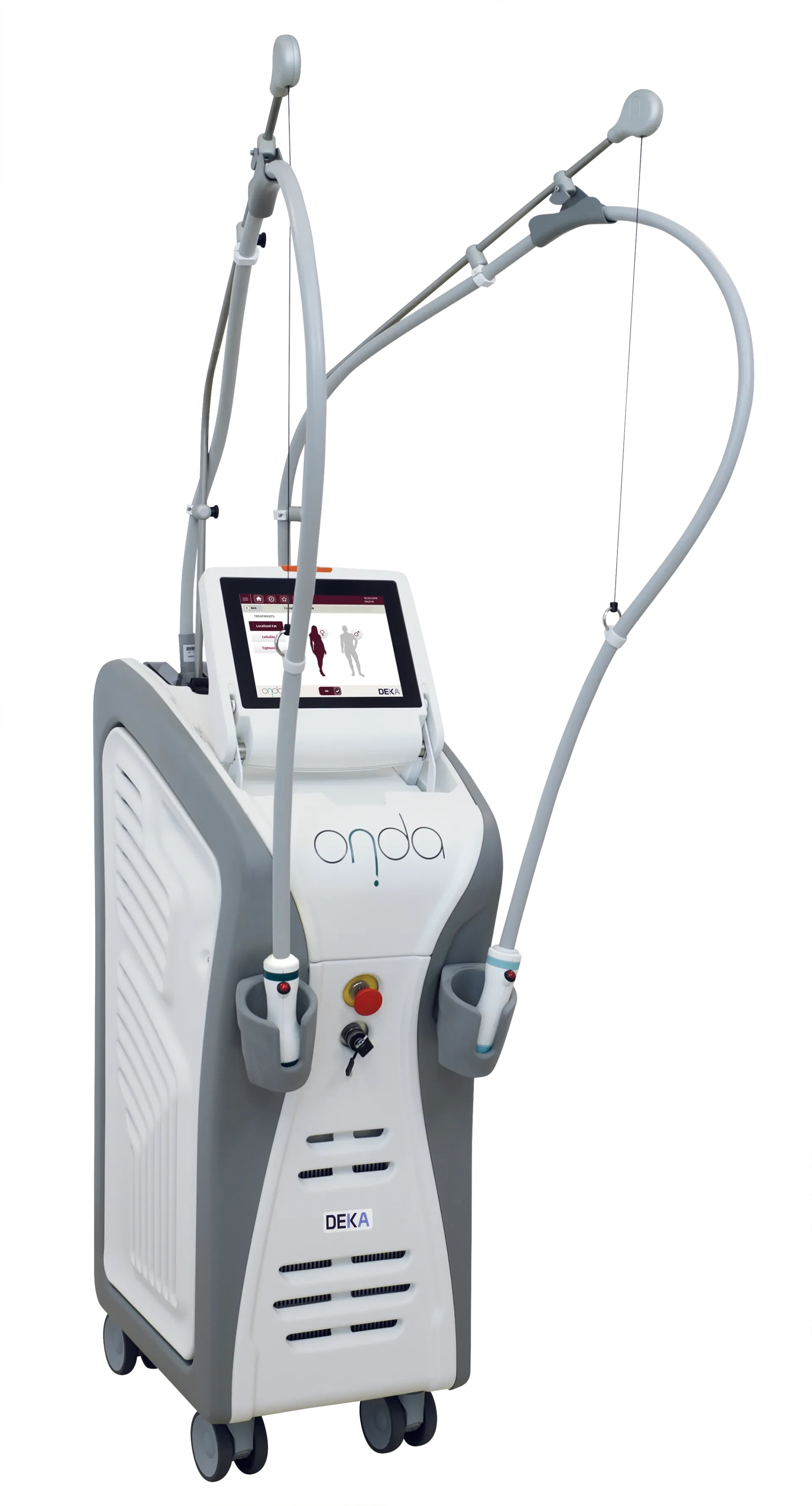
ONDA — and the name refers to a micro-wave platform from Korean manufacturer Classys, not an abbreviation a patient need parse — is a non-invasive body-contouring device that delivers controlled micro-wave energy to the subcutaneous adipose layer. The technology distinguishes itself from radiofrequency and high-intensity focused ultrasound by targeting fat cells at a specific depth window through a frequency calibrated for adipose-tissue absorption, sparing the dermis above and the muscle below. The biological mechanism is apoptosis: heated fat cells undergo programmed cell death over the following weeks and are cleared through the lymphatic system, with collagen remodelling producing a secondary tightening of the overlying skin. A typical body protocol — abdomen, flanks, or thighs — runs forty to sixty minutes per zone, with three to four sessions spaced four to six weeks apart. The peer-reviewed literature on micro-wave body work is, at present, more suggestive than conclusive; published studies report measurable reductions in adipose thickness and patient-satisfaction scores, but long-term randomised comparison against radiofrequency or HIFU remains limited. A reasonable patient weighs that honestly before booking. No incisions, no anaesthesia, no downtime beyond mild erythema and occasional transient tenderness.
How the eight clinics compare
What separates these practices is not the ONDA platform — which is identical hardware across the rooms — but the texture of how each clinic positions body work within its broader menu. Lydian sits at the surgical end, with non-invasive ONDA passes calibrated as adjunct to liposuction rather than as standalone work; the conversation begins with anatomy and surgical candidacy. Re:Berry's Incheon Airport site is calibrated explicitly for arriving international patients, with airport pickup logistics and multilingual aftercare built into the operating model. Cellin's Myeongdong room reads as a dermatology-first practice with ONDA fitted into a broader lifting menu, suiting visitors staying in the city centre. The Beautiful Skin Clinic (Gangnam) positions itself on accumulated clinical hours and a steady multi-session cadence rather than a single-visit programme. Lijin runs a tightly curated international-patient operation with body contouring named explicitly on the menu. Forena reads as the multi-channel English-language practice for visitors who prioritise concierge logistics and VIP suite privacy. Peau Reve's reservation-only structure suits the single-long-visit traveller. Reone reads as the device-density practice for patients who prefer to consult against a multi-platform menu rather than a single-device pathway. One chooses on temperament, not on tier.
How I'd choose between these eight clinics
In my reading, the choice rests less on the device and more on three quiet variables: how the practice handles arrival logistics from Incheon, whether the operator continuity survives across sessions, and whether the indication is read in the consultation room or assumed from the brochure. For the traveller flying in for a focused three-to-five-day trip who wants airport pickup folded into the protocol, Re:Berry's Incheon Airport site is the most directly calibrated option; for the visitor who has already decided body contouring requires a surgical conversation rather than a non-invasive one, Lydian sits at the other end of the spectrum. For Myeongdong-based itineraries that pair treatment with city-centre stays, Cellin reads as the convenient dermatology-led pairing; The Beautiful suits patients who value a long-running practice over a marquee one. Lijin and Forena both fit visitors who want the international-patient operation to feel turnkey, with slightly different temperaments. Peau Reve is the single-long-visit option; Reone is the multi-device consultation. The four-week review with the same operator, in writing, is the variable that separates a competent practice from a memorable one — one asks for that before transferring a deposit.
How we read these clinics
This survey is editorial — not a ranked recommendation. We read each clinic's published materials, cross-checked physician credentials against the Korean Medical Association registry where available, and considered each practice on three dimensions: protocol clarity, willingness to disclose operator continuity in writing, and the quality of aftercare promised before the patient leaves the lobby. We did not visit every clinic in person for this revision; where data was missing from a clinic's verified contacts in our database, no inline link is shown for that entry. The eight entries here are the practices one might reasonably consider for an Incheon-corridor ONDA body trip, not the only ones — Seoul holds dozens more, and the corridor itself shifts as new rooms open and senior operators rotate between groups. We revisit and revise this guide quarterly as the corridor's practices change, and we treat the database that underwrites it as a living document rather than a fixed list. Reader corrections from the field, where verifiable, find their way into the next revision before the printed brochures do.
Frequently asked questions
Is ONDA actually different from radiofrequency or HIFU body contouring?
Yes, in mechanism. ONDA delivers micro-wave energy calibrated for adipose-tissue absorption at a specific depth window, where radiofrequency heats tissue more broadly through electrical impedance and HIFU focuses ultrasound at a precise focal point. The clinical outputs overlap; the engineering pathways differ. The better operators choose by indication rather than by inventory.
How many ONDA sessions does a typical body programme require?
Three to four sessions spaced four to six weeks apart is the usual range for a first programme, with maintenance considered at six to twelve months thereafter depending on the response at week eight. A senior operator should adjust the cadence after a four-week review rather than commit a patient to a full series before tissue feedback is available.
Can I fly home the same day or the next morning?
Yes. ONDA leaves no incisions, no general anaesthesia, no bandages — only mild erythema and occasional transient tenderness over the treated zones for one to three days. The corridor traveller typically books a session on day two or three of the trip and flies home on day four without medical restriction; one keeps the operator's WhatsApp line for the first forty-eight hours regardless.
Is there meaningful peer-reviewed evidence for micro-wave body contouring?
Studies suggest the evidence is suggestive rather than conclusive. Published clinical work reports measurable reductions in adipose-layer thickness and patient-satisfaction scores, but long-term randomised comparison against established RF and HIFU platforms remains limited. A reasonable patient weighs that honestly and treats the protocol as adjunct to lifestyle rather than as substitute.
How should I judge price for an Incheon-corridor ONDA programme?
A single ONDA body session in Seoul typically ranges from KRW 600,000 to KRW 2,500,000 depending on the zone count, the operator's seniority, and the package structure. Materially higher prices are not necessarily materially better outcomes; materially lower prices often signal a junior operator or a non-Korean-manufactured machine. Transparent pricing in writing before booking is, in my reading, a non-negotiable.
What credentials should I check on the operator?
Korean medical licensure (verifiable through the Korean Medical Association), aesthetic medicine experience demonstrable in years rather than weeks, and — for non-Korean patients — a coordinator fluent enough to translate clinical nuance rather than appointment times. For ONDA specifically, ask whether the operator has trained directly with Classys or through a recognised continuing-education pathway.
Can I combine ONDA with other body work on the same trip?
Yes, and several of the practices above do — abdomen ONDA paired with flank thread-lifting, or ONDA layered onto a muscle-activation programme, is a common Seoul combination, sequenced rather than stacked into one session. The order matters; the senior physician should plan the sequence on consultation rather than offer a printed bundle.
What does one need to know about Incheon Airport pickup and transit?
Most international visitors enter Korea on the standard ninety-day visa-waiver framework — no medical visa is required for the protocols described on this page. The AREX express train reaches Seoul Station in roughly forty-three minutes; private pickup arranged by the clinic typically takes sixty to eighty minutes depending on traffic. One confirms the pickup format in writing before boarding the outbound flight.
Who should not book a non-invasive ONDA body programme?
Patients seeking a single-session dramatic transformation, those carrying implanted medical devices in the treatment field, active pregnancy, severe loose-skin laxity that requires surgical correction, or significant weight fluctuation expected within six months. The better operators decline the programme on indication grounds rather than book a session that will not deliver; a clinic that says yes to every consultation is the one to read more sceptically.